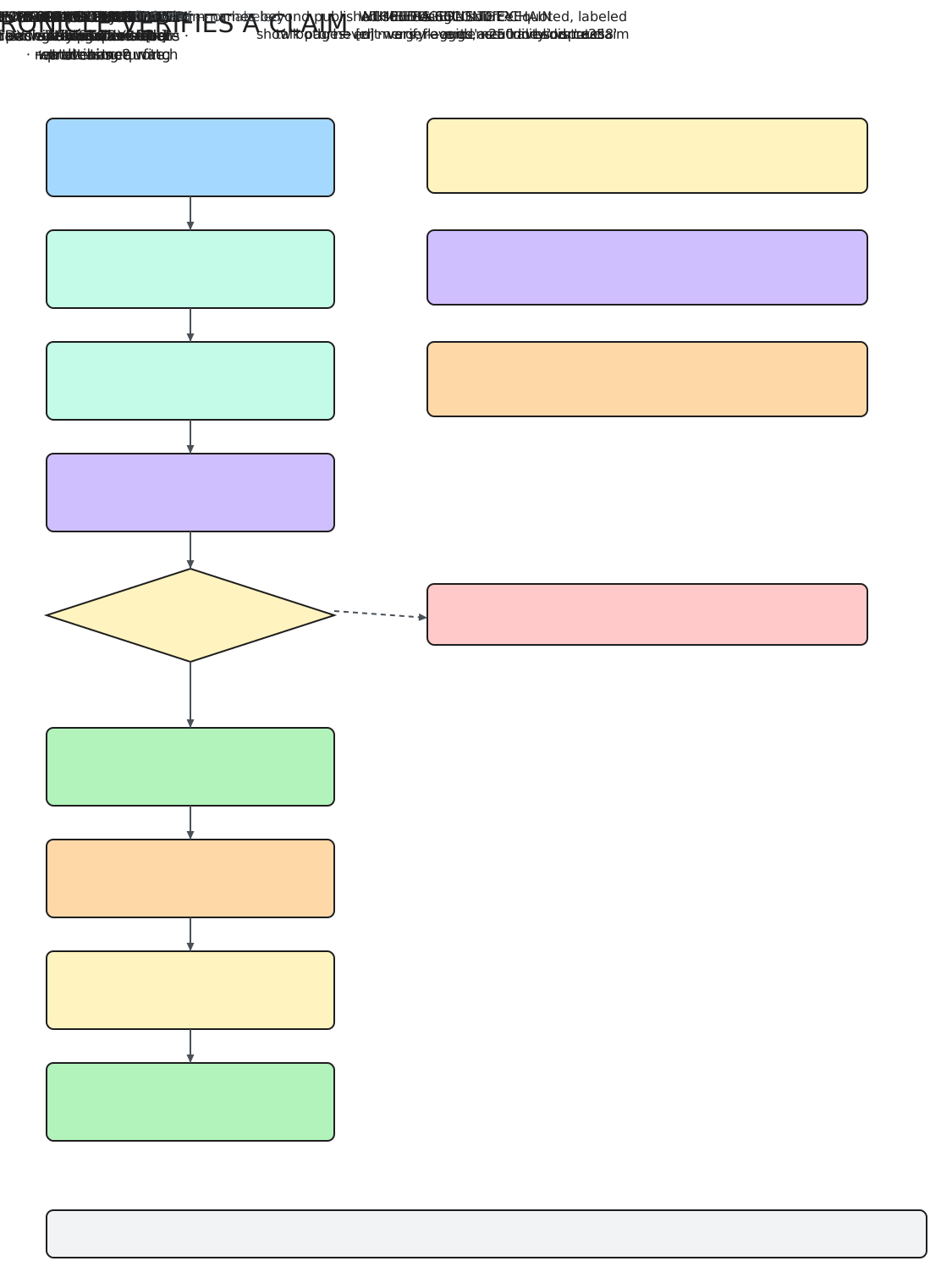
Every claim in the Manipur Chronicle passes through the same pipeline —
fetched, dated, quoted, cross-checked — or it is labeled. This page is the
pipeline, drawn.
Story on the field. A claim is collected from news
pages, Wikipedia (including talk pages), or social channels.
Fetch-once guard. Each page is fetched once and cached
in a manifest; it is never re-fetched without a logged reason.
Dated, not just live. Archive capture-date (CDX)
windows confirm a page said X at the time of the event — not only today.
Ledger + verbatim. Every source becomes a numbered
citation carrying a verbatim quote that must literally appear in the
fetched text. A paraphrase cannot pass the check.
Two or more sources? If a story has 2+ sources, the
cluster is tone-scanned — framing terms per outlet — and recorded in a
story-cluster file. A single source is quoted and explicitly labeled
a lone-source claim.
Tone-scan the cluster. Headline verbs, labels,
whose quotes carried, what context was added or omitted — compared
outlet by outlet.
Multi-angle check. Wikipedia talk pages are read for
edit wars, reverts, and neutrality disputes; outlet lean and retractions
are noted.
Perception layer. Social-media content is perception
data, never factual evidence — and bot-like amplification, when detected,
is itself a documented finding.
Publish. Conflicting numbers appear side by side,
never merged. Claims that cannot be sourced are flagged [unverified].
Every installment ends with a bias & provenance watch.
Stranger-safe throughout: no internal system detail, no
victim names beyond published sources, no rumor amplification except as
labeled examples of the disinformation layer.
limits, honestly
The method verifies what was published and when — it cannot
verify what happened offline. Sources can also be wrong in the same
direction, which is why conflicting readings are never merged and why
the chronicle reports claims about events rather than
certifying the events themselves.
Gaps are logged, not hidden: open questions appear in the installments
as future work, and the monthly timeline runs backfill items when a fresh
archive window surfaces them.